You keep dealing with the same incidents. You’ve posted the procedures. You’ve held the meetings. Nothing sticks.
If that sounds familiar, here’s what a lot of the safety industry won’t tell you: you can’t build a safety culture by focusing only on safety. What actually moves the needle is leadership training for supervisors — teaching the people running your crews how to lead, not just how to spot hazards.
I know that sounds backwards. You’ve probably been told safety needs its own training, its own program, maybe a poster on the wall reminding everyone to work safe. For a company your size, that approach just adds one more thing to your plate without fixing the real problem.
Safety culture isn’t something you build directly. It’s what happens when your supervisors know how to lead their crew members. Get that right, and safety follows. Skip it, and no amount of safety training will stick.
Why Safety Training Alone Doesn’t Work
Send a supervisor to a safety course and they’ll come back knowing hazard recognition and how to fill out an incident report. Then they’re back on the floor with the same crew, and nothing changes. Crew members still cut corners. Nobody speaks up when something looks off. The same couple of people keep getting hurt, or almost hurt.
The course wasn’t the problem. The problem is that a safety course isn’t leadership training for supervisors. It doesn’t teach your supervisors how to lead people. And leading people is the actual job.
You’re Not Just Worried About Safety
When you’re running a company with 25 to 35 employees, safety is one of maybe a dozen things keeping you up at night. There’s turnover. There’s productivity. There’s whether your best people are sticking around or heading down the road for fifty cents more an hour. There’s whether new hires get up to speed fast enough to actually be useful.
That’s exactly why a safety-only fix is a hard sell, even to yourself. You don’t have the luxury of solving one problem at a time. You need something that moves more than one needle.
The Multi-Metric Reality
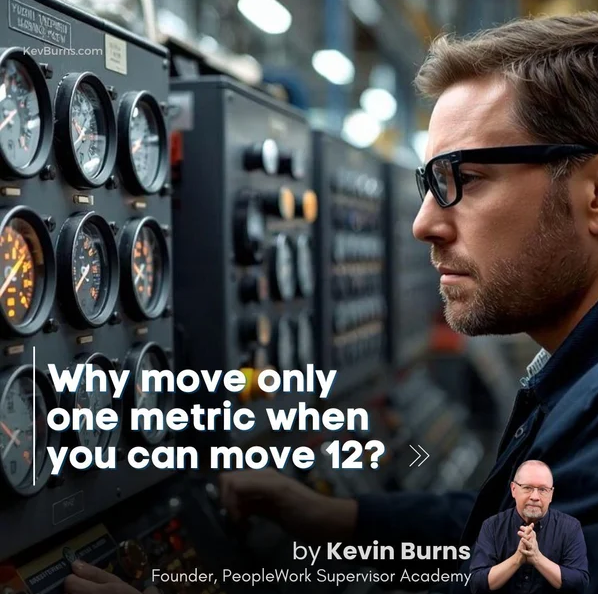
Here’s the thing: when your supervisors get real leadership training, it doesn’t just help safety. It touches everything a supervisor influences — incident rates, turnover, productivity, how fast someone picks up a new process, how many complaints come out of their crew, whether your best crew members stick around long enough to become supervisors themselves. There isn’t a metric on that list that leadership skill doesn’t touch. So why settle for a fix that might move one of them, when you could have one that moves all of them?
What Actually Builds a Safety Culture
Safety culture shows up in the small moments between a supervisor and their crew. When a supervisor notices someone’s off their game and asks what’s going on, out of real care and not obligation, that’s safety culture. When crew members trust their supervisor enough to flag a problem before it becomes an incident, that’s safety culture. When people do the job right even when nobody’s watching, because they respect the person running the crew, that’s safety culture.
None of that comes out of a training binder. It comes from supervisors who know how to build trust, communicate clearly, and hold people accountable without making them afraid. Supervisors who lead by example and coach instead of just barking orders.
I call this being a CareFull supervisor. Not just careful, but full of care. Full of care for their crew, for the work, and for doing things right. That’s the difference between a supervisor who gets people to comply and one who builds a crew that actually gives a damn.
Here’s the thing about your own actual family: nobody has to keep reminding everyone that they’re family. They just are. You know it, they know it, and anyone watching from outside can tell. If your supervisors have to keep saying “we’re a family here,” they aren’t one yet.
You’re Already Paying For This
Here’s the hard truth: you’re already writing a check for supervisor development, one way or another. You can write it now, by investing in leadership training for supervisors. Or you can keep writing it later, in replacement costs when a good crew member quits, in the productivity you lose to a crew that’s not clicking, in the insurance hit after another incident.
Front-end costs less and builds something. Back-end costs more and leaves you right back where you started.
Thirty-eight lessons. One lesson per day. One workbook page per day. All in under 10 minutes per day. No pulling anyone off the job for days at a time. Your supervisors learn while they work with their teams. Zero operational disruption. And, results you’ll see in weeks.
A Program Built For This
You don’t build family directly. What you can do is give your supervisors the skills to build the relationships that lead to it — the kind where crew members speak up when something’s wrong, pick up each other’s slack without being asked, and don’t let a shortcut slide because they genuinely care what happens to each other.
This is exactly the kind of leadership training for supervisors that PeopleWork Supervisor Core Essentials is built to deliver, and it works for companies your size — 25 to 35 employees, no HR department, no time to pull people off the job for a week of training.
Thirty-eight lessons. One lesson per day. One workbook page per day. All in under 10 minutes per day. No pulling anyone off the job for days at a time. Your supervisors learn while they work with their teams. Zero operational disruption. And, results you’ll see in weeks.
PeopleWork Supervisor Core Essentials isn’t a safety course with a few leadership tips bolted on. It’s leadership training for supervisors, built for companies your size, that happens to move safety right along with everything else. Your supervisors build the trust, communication, and coaching skills that touch every part of how your crew works, not just how they avoid getting hurt.
Get PeopleWork Supervisor Core Essentials for your supervisors — $995. Give them the tools to lead, and watch how many other problems start solving themselves too.
Keep caring, Kevin