
Your supervisors work hard. Nobody doubts that. But without real leadership training for supervisors, hard work and effective leadership stay two different things — and mixing them up is costing your operation more than you probably realize.
Your supervisors spend the whole day doing things: fixing problems, answering questions, running from one fire to the next. They go home wiped out, and they earned it. But busy and effective aren’t the same thing, and the gap between them is quietly draining your operation.
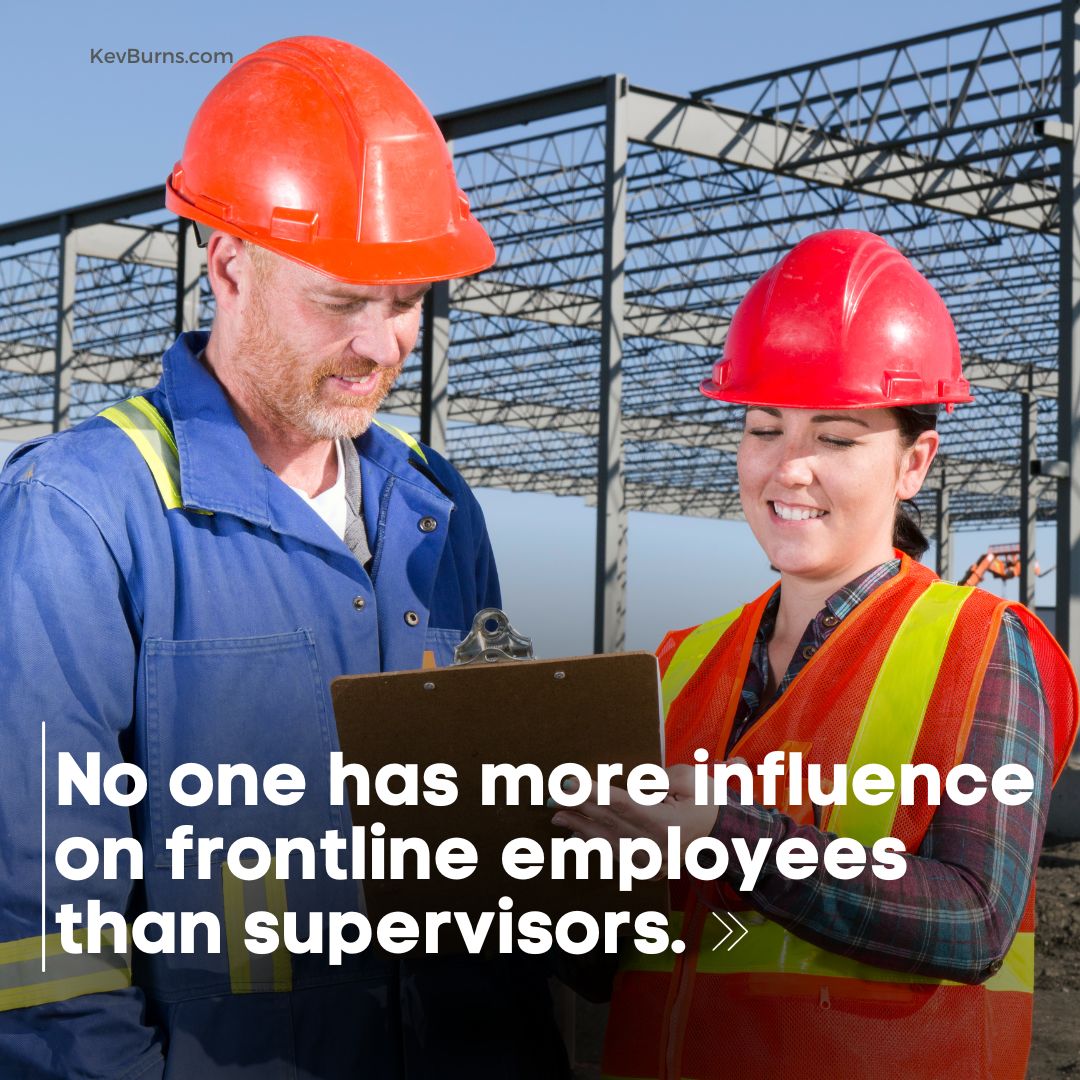
The Gunslinger Problem
Most of your supervisors got the job because they were the best hands-on worker you had. When something broke, they fixed it and moved on. That instinct made them valuable as a crew member. It’s exactly what holds them back now that they’re supervising others.
When a supervisor fixes every problem themselves, their crew never learns to solve problems without them, and the supervisor becomes the bottleneck — every decision runs through one person.
Kevin Burns, who built the CareFull Supervisor model, puts it this way: a supervisor isn’t a gunslinger. Solving every problem doesn’t prove how capable they are — it proves nothing runs without them standing in the middle of it.
That’s a hard thing for a hardworking supervisor to hear. But it’s true. The supervisor who fixes everything is the same supervisor whose crew never grows. The crew waits. The supervisor runs. The whole operation spins in place.
The Shift That Changes Everything
Moving your supervisors from busy to effective starts with one change: from fixing to coaching. Instead of solving a problem for a crew member, your supervisors need to walk them through it — ask what they think the answer is, then work it out together. It takes longer the first time. By the second time, that crew member doesn’t need help at all.
Coaches don’t get the wins. They set their players up to get them. A supervisor who coaches builds a crew that gets stronger; a supervisor who fixes builds one that stays dependent.
The Why Behind The What
Here’s a second gap that shows up constantly. A supervisor tells someone what to do, the task comes back wrong or trails fifteen follow-up questions, and the supervisor gets frustrated. The crew member feels like they’re always missing something.
The missing piece is almost always the why. When your supervisors take sixty seconds to explain why a task matters, something shifts. People do better work when they understand the point of it, and ask fewer questions because they already have the context they need.
Telling people what to do is a shortcut that creates more work down the line. Explaining the why takes longer up front and saves time every day after. Your crew isn’t looking for a rulebook — they’re looking for a reason.
This is the center of what we call the CareFull Supervisor — not just careful, but full of care. Full of care for their crew, for the work, and for doing things right. That’s the difference between a supervisor who gets compliance and one who builds a team that actually gives a damn.
Busy Isn’t The Same As Effective
A supervisor who’s always fixing, always answering, always in the middle of the problem will always look busy. That’s not effectiveness — it’s a system that depends on one person never calling in sick.
An effective supervisor builds a crew that can run without them being the answer to everything. That’s a skill, and it’s one your supervisors can learn — whether you run 25 people or 35, with no HR department and no corporate program to roll out.
This is where leadership training for supervisors makes the real difference — not more hours worked, but different skills applied. Steve Lorentz, a PeopleWork Supervisor Core Essentials graduate, put it this way:
“Within my role, people come to me with problems they want solved. It’s really easy for me to provide answers. But I’ve become better at asking questions and helping lead them to the decision on their own. Now it’s their ideas – they already know the answer, they probably just need a little bit more support.”
That’s the shift, in one supervisor’s own words.
Would You Like to Fix This?
Yes, you can. But first you need to know what you’re actually fixing. This isn’t an effort problem — your supervisors are already working hard. It’s a skills problem: coaching instead of fixing, explaining the why, connecting with each crew member before the day falls apart. These are learnable skills. But somebody has to teach them.
Thirty-eight lessons. One lesson per day. One workbook page per day. All in under 10 minutes per day. No pulling anyone off the job for days at a time. Your supervisors learn while they work with their teams. Zero operational disruption. And, results you’ll see in weeks.
Get PeopleWork Supervisor Core Essentials for your supervisors — $995. It’s not a rulebook, and it’s not more hours. It’s the leadership training for supervisors that turns a busy day into an effective one.
Keep caring,
Kevin